

8 lectures, 45 minutes/lecture
Taught by Frank B. Cross
The University of Texas at Austin
J.D., Harvard Law School
This course addresses two important questions:
* When is someone else legally responsible for harm done to you?
* When are you legally responsible for harm done to someone else?
This course of eight lectures discusses torts, the body of law designed to redress through civil litigation harms done to persons.
As with all bodies of law, in order to analyze the legal implications of a potentially tortious action, it is necessary to blend common sense and pragmatic thinking with an understanding of legal definitions as they have evolved over time.
This lecture series not only explains the basics of this substantive body of law, but it also gives insight through examples of how the law is based on a logical idea of a just outcome.
You have an outstanding guide to understand clearly this area of law. Professor Frank B. Cross is Professor of Business Regulation at The University of Texas at Austin and a former attorney with the law firm of Kirkland & Ellis in Washington, DC.
The Academy of Legal Studies in Business honored Professor Cross as the nation's outstanding professor. Business Week 's guide to M.B.A. programs has also recognized him as one of the nation's outstanding teachers.
His conversational, clear, thorough, and humorous style makes this course a pleasure.
Price:
Business Law: Negligence & Torts
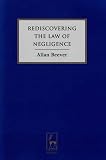
This book offers a systematic and theoretical exploration of the law of negligence. It re-establishes the notion that thinking about the law ought to and can proceed on the basis of principle. As such, it is opposed to the prevalent modern view that the various aspects of the law are, and must be, based on individual policy decisions, and that the task of the judge or commentator is to shape the law in terms of the relevant policies as s/he sees them. The book, then, is an attempt to re-establish the law of negligence as a body of law rather than as a branch of politics. Now in paperback, the book argues that the law of negligence is best understood in terms of a relatively small set of principles enunciated in a small number of leading cases. It further argues that these principles are themselves best seen in terms of an aspect of morality called corrective justice which, when applied to the most important aspects of the law of negligence reveals that the law — even as it now exists — possesses a far greater degree of conceptual unity than is commonly thought. Using this method, the author is able to examine familiar aspects of the law of negligence — such as the standard of care, the duty of care, remoteness, misfeasance, economic loss, negligent misrepresentation, the liability of public bodies, wrongful conception, nervous shock, the defense of contributory negligence, the defense of voluntary assumption of risk, causation, and issues concerning proof — to show that when the principles are applied and the idea of corrective justice is properly understood, then the law appears both systematic and conceptually satisfactory. The upshot is a rediscovery of the law of negligence.
List Price: $ 52.00
Price: $ 32.95
Rediscovering the Law of Negligence
Orignal From: Business Law: Negligence & Torts Reviews


Post a Comment